When a developer, engineer, or government agency in Kenya needs a land survey, the conversation inevitably turns to method: do we fly a drone, or do we send a survey crew with a total station? The honest answer is that neither tool is universally better — each excels in specific scenarios, and the smartest operators know when to use which, or when to combine both.
This article gives you a practical comparison across the metrics that matter most on Kenyan projects: accuracy, speed, terrain suitability, and deliverable type. By the end you will be able to make an informed decision — or ask the right questions when briefing a survey provider.
What Is a Drone Survey?
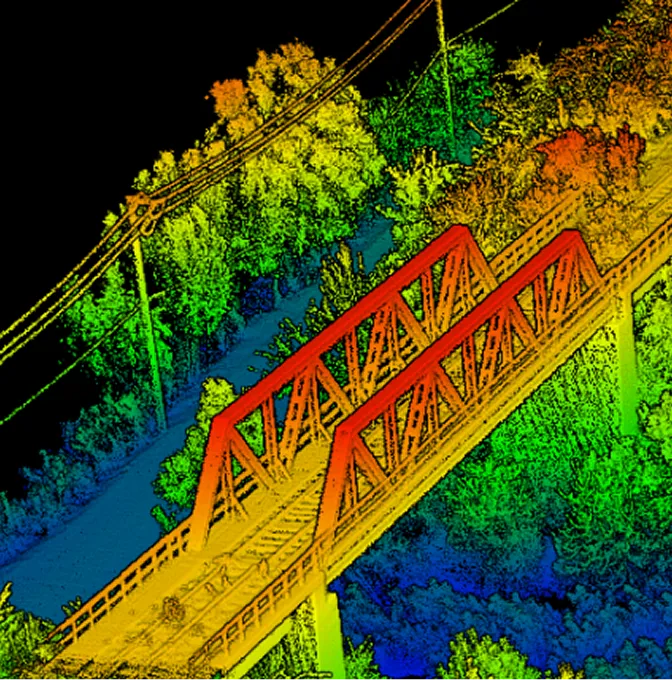
A drone (or UAV/RPAS) survey uses an unmanned aircraft equipped with a calibrated camera, LiDAR sensor, or multispectral sensor to capture overlapping images or point-cloud data of the ground. The raw data is processed using photogrammetry or LiDAR software (such as Pix4D, Agisoft Metashape, or DJI Terra) to produce georeferenced orthomosaics, digital elevation models (DEMs), digital terrain models (DTMs), contour maps, and 3D models.
Modern survey-grade drones like the DJI Matrice 350 RTK with a P1 camera, or fixed-wing platforms like the WingtraOne, achieve absolute horizontal accuracies of 2–3 cm and vertical accuracies of 3–5 cm when used with ground control points (GCPs) or a real-time kinematic (RTK) / post-processed kinematic (PPK) GNSS workflow.
A typical drone survey mission covers 20–100 hectares per day depending on terrain, altitude, and required ground sample distance (GSD). Some fixed-wing platforms can cover up to 400 hectares in a single flight.
What Is a Total Station Survey?
A total station is an electronic instrument that combines an electronic theodolite (for measuring angles) with an electronic distance meter (EDM). The surveyor sets up the instrument on a known point and measures angles and distances to a prism held by a rod-person at each point of interest. The result is a set of precisely measured 3D coordinates.
Total stations like the Leica TS16, Topcon GT-1200, or Trimble S9 achieve point accuracies of 1–3 mm in angle and 1–2 mm + 1 ppm in distance. For setting-out work (placing design points on the ground), this sub-centimetre accuracy is unmatched by current drone technology.
A survey crew with a total station typically covers 2–10 hectares per day, depending on terrain density, number of points required, and accessibility. In urban environments with many features to pick up, output can drop to under 1 hectare per day.
Accuracy Comparison
For most topographical surveys, engineering design, and volumetric calculations in Kenya, the 2–5 cm accuracy delivered by a well-executed drone survey is more than sufficient. Road design, earthworks estimation, master planning, EIA baseline mapping, and agricultural analysis all sit comfortably within this tolerance.
Total station accuracy (1–3 mm) becomes essential for structural setting-out, high-precision boundary surveys, deformation monitoring (e.g., dam walls, bridge piers), and cadastral work where the Survey of Kenya demands specific accuracy classes. If your project requires better than 2 cm, a total station — or a combination of drone + total station — is the way to go.
A hybrid approach is increasingly common on large Kenyan infrastructure projects: the drone captures the broad topographical surface quickly, and the total station picks up specific control points, building corners, kerb lines, and underground utility covers at higher precision.
Speed and Coverage
This is where drones dominate. A single drone operator can cover 50–100 hectares in a day — work that would take a traditional survey crew two to four weeks. On a 500-acre ranch survey in Laikipia or a solar-farm site in Kajiado, the time savings are transformational.
Total stations are inherently point-by-point instruments. Each measured point requires the rod-person to physically walk to the location, plumb the prism, and wait for the measurement. On large sites with sparse features this is slow; on small, dense sites (like a building footprint or a congested road junction) it remains efficient because every point is measured with intent.
For projects where time-to-deliverable is critical — such as emergency flood mapping, rapid EIA baselines, or investor-ready site plans — drone surveys are almost always the better choice.
Efficiency at Different Site Scales
On large sites (above 10 hectares), drones offer dramatically faster data capture. The overhead of mobilisation, GCP placement, and post-processing is spread over a large area, making the drone approach highly efficient. A 50-hectare site that might take a ground crew 10–15 field days can be flown in a single morning.
On small sites (under 5 hectares), the balance shifts. The drone's fixed mobilisation and processing overhead makes up a larger proportion of the total effort, while a total station crew can often complete the work in a day or two with immediate field results. A boundary survey of a quarter-acre plot in Nairobi is more practical with a total station than with a drone.
The crossover point — where drones become clearly more efficient than total stations for topographical work — typically sits around 5–10 hectares. Below that, traditional methods often deliver faster turnaround for simple feature surveys. Above that, drones deliver exponential efficiency gains.
Terrain and Environment Considerations
Kenya's diverse terrain — from the Rift Valley escarpments to the Mau Forest, from coastal mangroves to arid northern rangelands — means terrain is a significant factor in method selection.
Drones excel on: open terrain with good GNSS reception (ranches, farms, quarries, solar sites), moderately vegetated areas where photogrammetry can still resolve the ground surface, steep or rocky terrain that is dangerous or slow for ground crews, and flood-prone or swampy areas where foot access is difficult.
Total stations excel on: dense urban environments with narrow streets and tall buildings that cause GNSS shadowing and obstruct drone flights, heavily forested areas where tree canopy blocks both GNSS signals and camera views of the ground (though LiDAR drones partially overcome this), sites near airports or military installations where drone flights are restricted or prohibited, and underground or indoor environments where drones cannot fly.
In the Kenyan highlands and around Nairobi, weather is also a factor — persistent cloud cover, wind, and rain during the long rains (March–May) can ground drones for days, while a total station crew can often work through drizzle.
Deliverables: What Each Method Produces
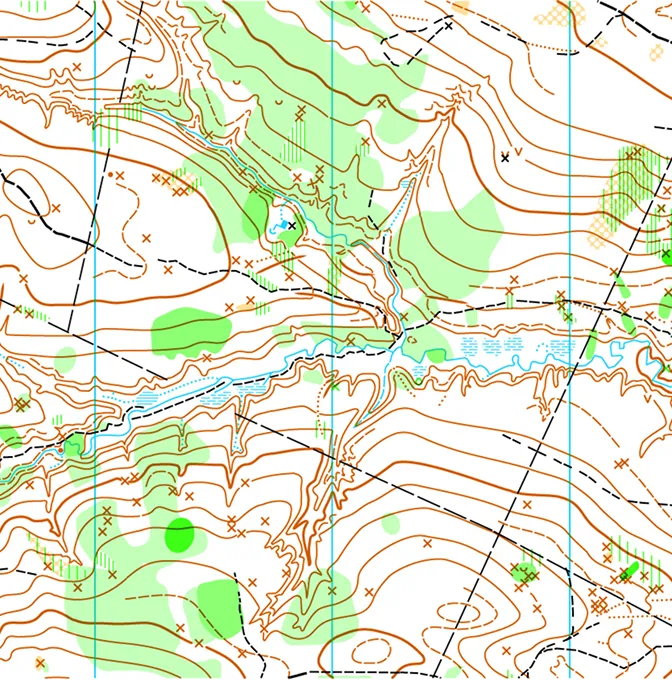
Drone surveys produce rich, visual, area-based deliverables: orthomosaics (georeferenced aerial photos), DEMs/DTMs, contour maps, 3D point clouds, 3D textured meshes, volumetric calculations, and NDVI or multispectral maps for agricultural analysis. These products are immediately useful for GIS, CAD, BIM, and client presentations.
Total station surveys produce precise, point-based deliverables: coordinated point lists, cadastral plans, engineering drawings, setting-out reports, and as-built surveys. The data integrates directly into engineering design software like AutoCAD Civil 3D and is the standard accepted by the Survey of Kenya for cadastral filings.
For many projects, you need both types of output — a high-resolution orthomosaic for context and stakeholder communication, plus a precise control network and building setout coordinates. This is where the hybrid approach delivers the most value.
When to Combine Both Methods
The most successful survey projects we deliver at Serian Geospatial often use both methods. A typical hybrid workflow looks like this: the survey team establishes a GNSS control network and places GCPs across the site using a total station or GNSS rover. The drone then flies the entire site, capturing thousands of images. The photogrammetry software uses the GCPs to achieve high absolute accuracy across the full area. Finally, the total station picks up specific features that the drone cannot resolve with sufficient precision — underground utility covers, building corners, kerb lines, fence posts, and boundary beacons.
This approach gives you the speed and coverage of a drone survey with the precision of a total station where it matters most. On large infrastructure projects — highways, housing estates, industrial parks — it is rapidly becoming the standard methodology in Kenya.
Making Your Decision
Choose a drone survey when: the site is larger than 5–10 hectares, you need area-based deliverables (orthomosaics, DEMs, contours), 2–5 cm accuracy meets your requirements, speed is a priority, and the terrain is open with good GNSS coverage.
Choose a total station survey when: the site is small (under 5 hectares), you need sub-centimetre accuracy for setting-out or cadastral work, the site is in a dense urban area or under heavy tree canopy, drone flights are restricted (near airports, military zones), or you need to survey underground utilities or interior spaces.
Choose a hybrid approach when: the project is large and requires both broad coverage and localised precision, you need both visual outputs (orthomosaics) and engineering-grade coordinates, or the site has mixed terrain — open areas suitable for drones and constrained areas that demand ground survey.