Full operational compliance
Operations manual, safety case, emergency procedures, risk assessment and KCAA notifications — aligned to the UAS Regulations 2020 and the Manual of Implementing Standards.
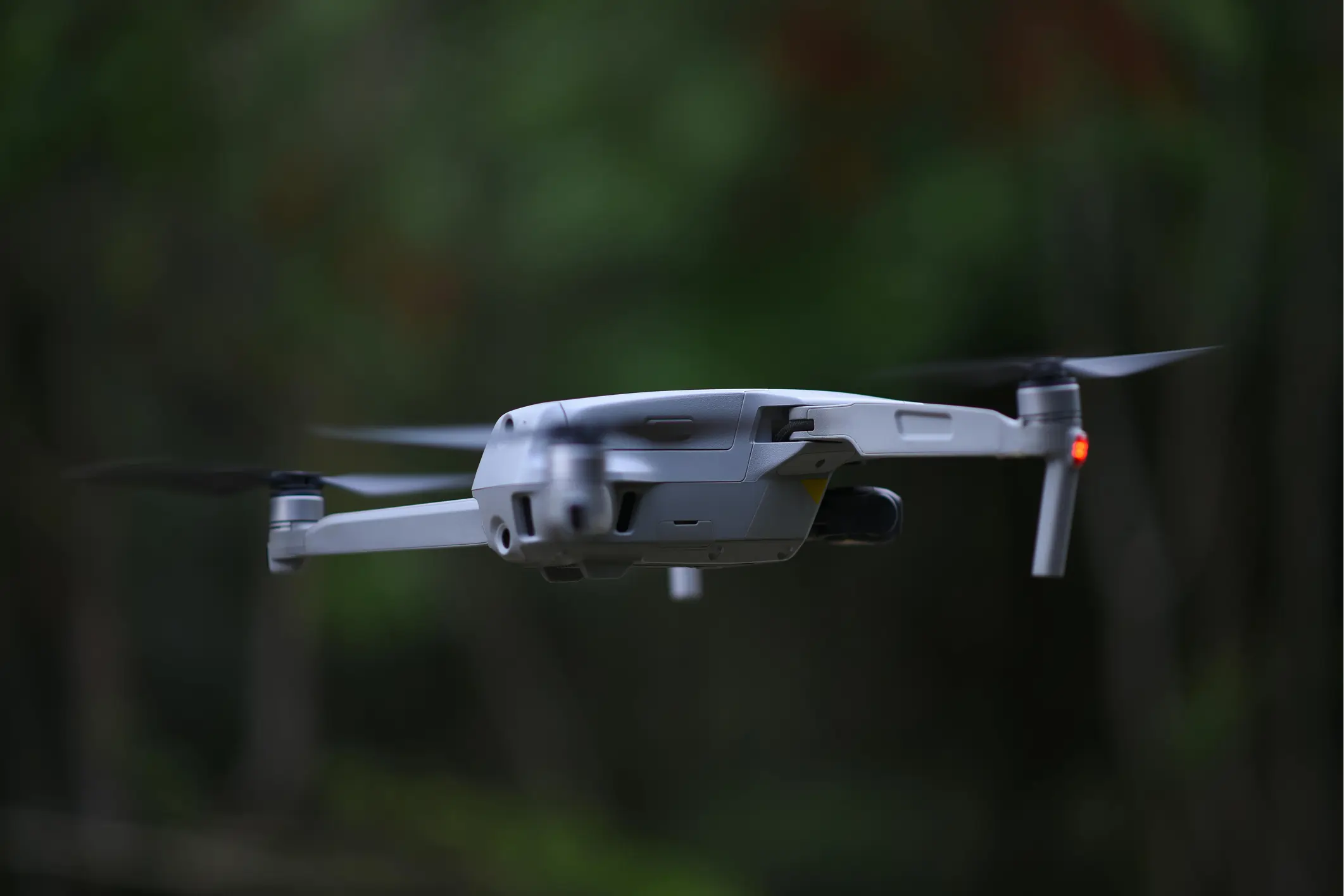
Compliant commercial drone operations under our KCAA-approved Remote Operator Certificate — whether you need our pilots and platforms or want to fly your own drones and crew under Serian’s ROC.
Under Kenya’s Civil Aviation (Unmanned Aircraft Systems) Regulations, every commercial drone operation must be conducted under a Remote Operator Certificate (ROC) issued by KCAA. Getting one means demonstrating adequate organisation, a documented operations manual, a training programme, maintenance arrangements, a safety case for every mission category, and licensed pilots — before a single flight is approved.
Most organisations that need drone data — for surveying, inspection, construction monitoring or media — don’t need to own that entire apparatus. They need someone who already has it. We bring the ROC, the operations manual, the safety oversight and the regulatory record. You can use our pilots and platforms end-to-end, or bring your own drones and crew and fly them under Serian’s certificate. Either way, flights happen the way KCAA expects, every piece of documentation is in place, and the data you actually need arrives on time.
Sized for a one-off mission, a project window or an ongoing programme. Everything the regulator expects is handled on our side.
Operations manual, safety case, emergency procedures, risk assessment and KCAA notifications — aligned to the UAS Regulations 2020 and the Manual of Implementing Standards.
We supply RPL-certified pilots matched to the mission, or onboard your own pilots and drones under our ROC — verifying licences, aircraft registration, insurance and maintenance status before they fly.
Airspace classification, airport proximity checks (10 km for Code C–F, 7 km for Code A–B), ATC notifications, site access, weather windows and NOTAM review — sorted before mobilisation.
Detailed flight logs, crew assignments, maintenance records and incident documentation — auditable and available for regulatory review at any time.
A short loop: scope, plan, fly, close out. The compliance work happens inside the loop, not as an afterthought.
We get the operation, location, aircraft type, payload, risk category (A, B or C) and target outputs straight. This determines everything that follows.
Operations manual excerpt, safety case, risk assessment and emergency procedures are prepared for the specific mission. Airspace and ATC coordination are handled if required.
RPL-certified pilots are matched to the project — ours or yours. If you’re bringing your own crew and drones, we verify licences, registration, insurance and maintenance status before clearing them to fly under our certificate.
The operation runs to plan. Flight logs, safety records and project deliverables are compiled and handed over. The regulatory file stays with us.
When the work needs to happen now and KCAA compliance needs to be airtight.
Run commercial drone projects — mapping, survey, inspection — before committing to the time and cost of standing up your own ROC. Use our pilots or test your own team under our certificate.
Compliant drone capability for a defined project window: construction monitoring, corridor survey, asset inspection, environmental assessment or media production.
Repeat missions on a schedule — consistent procedures, shared documentation, the same safety framework every cycle.
International and public-sector teams that need KCAA-compliant aerial data collection without building local operational infrastructure from scratch.
You have the equipment and the crew but not the ROC. We provide the certificate, the operations manual and the safety oversight — your team flies under our regulatory umbrella.
Drone operations we’ve conducted under our certificate, across project types and industries.
We carry the KCAA approvals, the operations manual, the procedures and the operational record. Your project gets the data, the flights and the documentation — without inheriting our paperwork.
Context for teams evaluating whether to build their own ROC or operate under an existing one.
A Remote Operator Certificate (ROC) is the commercial drone operating licence issued by the Kenya Civil Aviation Authority under the Civil Aviation (Unmanned Aircraft Systems) Regulations, 2020. Without one, commercial drone flights in Kenyan airspace are not legal.
KCAA issues a ROC only after the operator demonstrates adequate organisation, a method of controlling and supervising flight operations, a training programme, and ground handling and maintenance arrangements consistent with the nature and extent of the intended operations. The certificate must be renewed and the holder is subject to ongoing oversight.
KCAA classifies drone operations into three risk categories. Category A covers low-risk VLOS flights below 400 ft AGL with drones up to 25 kg — these require registration and notification. Category B covers medium-risk operations that need operational authorisation and a safety risk assessment before flight. Category C covers high-risk operations including BVLOS, which require a Certificate of Airworthiness, ATC coordination and pilots with appropriate ratings.
Most commercial survey, mapping and inspection work falls into Category A or B. We scope each engagement against this framework so the paperwork matches the actual risk, not the worst-case scenario.
Building a ROC from scratch means writing an operations manual, developing emergency procedures for control failure, engine failure, battery issues and command-link loss, establishing a maintenance programme, training and licensing pilots, registering every aircraft, securing liability insurance, and submitting the full package for KCAA review.
For organisations whose core business is not drone operations, the time, cost and ongoing compliance burden of holding a ROC is rarely justified. Operating under an existing certificate — ours — gives you the same regulatory standing for the flights you actually need, without the overhead. This applies whether you want us to supply the full team or whether you’re bringing your own drones and pilots and just need the ROC wrapper.
Straight answers to the things clients want to know before engaging.
A ROC is the commercial drone operating licence issued by KCAA under the Civil Aviation (UAS) Regulations, 2020. Any person or organisation operating a drone for commercial purposes in Kenya — survey, mapping, inspection, media, agriculture — must hold one or operate under a holder’s certificate. Flying commercially without a ROC is a regulatory offence.
Yes. That’s exactly what this service is. Your flights are conducted under our ROC, using our operations manual and safety procedures. You can use our pilots and platforms, or bring your own drones and crew — we verify their licences, registration and insurance, then onboard them under our certificate. KCAA sees a compliant operation either way. This is common for project-specific work, short-term engagements, research organisations and companies evaluating drone capability before committing to their own ROC.
We cover Category A (low-risk VLOS up to 400 ft AGL), Category B (medium-risk operations requiring safety risk assessment and operational authorisation) and can coordinate Category C (high-risk, including BVLOS) where the project scope justifies it. Most commercial survey and inspection work in Kenya falls into Category A or B.
Yes. All pilots operating under our ROC hold valid Remote Pilot Licences (RPL) issued by KCAA. Licence currency, flight hours and type ratings are verified before every assignment. Pilots with specific experience — LiDAR, photogrammetry, corridor work, thermal — are matched to the project requirements.
KCAA prohibits drone operations within 10 km of Code C, D, E and F airports and within 7 km of Code A and B airports without specific authorisation. We handle all airspace checks, ATC notifications and, where needed, coordinate controlled-airspace approvals before mobilisation. Restricted and prohibited areas are identified during mission planning and avoided or permitted as required.
For a straightforward Category A operation on open ground, we can scope, plan and mobilise within a few days. Category B operations with airspace coordination or complex sites typically need one to two weeks of planning. The variables are site access, airspace classification, payload requirements and the number of flight days.
You get the project deliverables — imagery, maps, reports, whatever the engagement called for — plus a summary of the flights conducted. The full regulatory file (flight logs, crew records, maintenance logs, safety case, incident reports if any) stays with us and is available for review or audit at any time.
Yes. If you already have registered aircraft and RPL-certified pilots, they can operate under our ROC. We verify pilot licences, aircraft registration, maintenance records and insurance, then fold them into our operations manual and safety procedures for the engagement. Your crew flies; our certificate covers the regulatory side.
Our ROC operations carry liability insurance as required by KCAA. If you’re bringing your own drones, they’ll need current insurance too — we can advise on what’s required and help coordinate cover if needed.
Yes. We have operated across multiple counties including Nairobi, Kiambu, Kajiado, Nakuru, Turkana, Marsabit, Kilifi, Laikipia and Uasin Gishu. Remote and field-based operations are part of our normal workflow. KCAA notifications and any county-specific requirements are handled as part of mission planning.
Other things our team gets brought in for, often on the same projects.
We hold the regulatory approvals and supplier partnerships required to deliver compliant, audit-ready geospatial outcomes across East Africa.